
XFLOPS/Flame Overview
Welcome to the XFLOPS! Learn about Flame, a distributed engine for AI Agents and Quant.
Welcome to XFLOPS!
XFLOPS is a vibrant community focused on empowering members to build serverless platforms for elastic workloads, including AI/Agent systems, Big Data, and quantitative computing. Every project within XFLOPS is founded on decades of expertise in both batch and elastic workload management, ensuring robust and scalable solutions.
What’s Flame
Flame is a distributed engine for AI Agents and Quant, designed to handle the most demanding elastic workloads with unprecedented efficiency and scalability.
Key Features of Flame
- Elastic: Scale the workloads dynamically based on demand with auto-scaling capabilities and resource optimization.
- Security: Session-based authentication and authorization for secure access to your elastic workloads.
- Cost Effective: Advanced scheduling algorithms that optimize resource utilization and workload distribution across the infrastructure.
- Heterogeneous: Support for various hardware configurations including GPUs, TPUs, and specialized accelerators.
- High Performance: Optimized for maximum throughput and performance.
- Bare Metal Native: Designed for bare metal environments to squeeze every bit of performance.
Quick Start
If you’re ready to dive in immediately, here’s a quick overview of what you’ll need:
- Prerequisites: Linux, Rust, Python 3
- Installation: Deploy Flame using
flmadm - Configuration: Set up your first
flm.conf - Deployment: Launch your first distributed AI workload
Architecture Overview
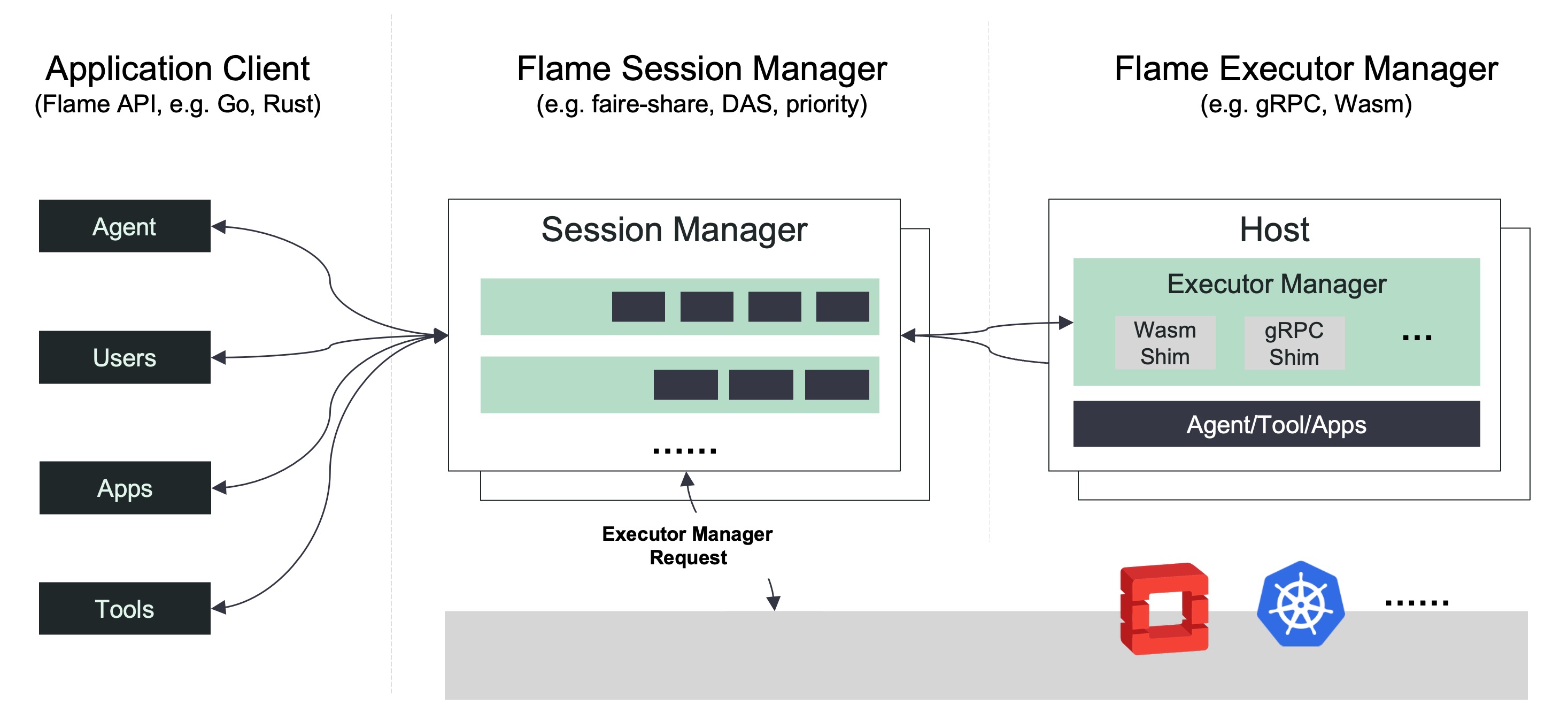
Flame follows a distributed architecture designed for high-performance computing:
Getting Help
- Issues: If you find errors or have suggestions, please open an issue on GitHub
- Community Support: Join our Slack community for real-time help
- Email Support: Contact us at support@xflops.io
Contributing
We welcome contributions from the community! Whether it’s improving documentation, reporting bugs, or contributing code, every contribution helps make Flame better for everyone.
- Documentation: Submit pull requests to improve our docs
- Code: Contribute to the Flame project
- Feedback: Share your experiences and suggestions
What’s Next?
Ready to get started? We recommend beginning with the Getting Started guide, which will walk you through your first Flame deployment.
Last updated: February 20, 2026